
 Appointments
 Locations
 Donor Portal
 Xpress Pass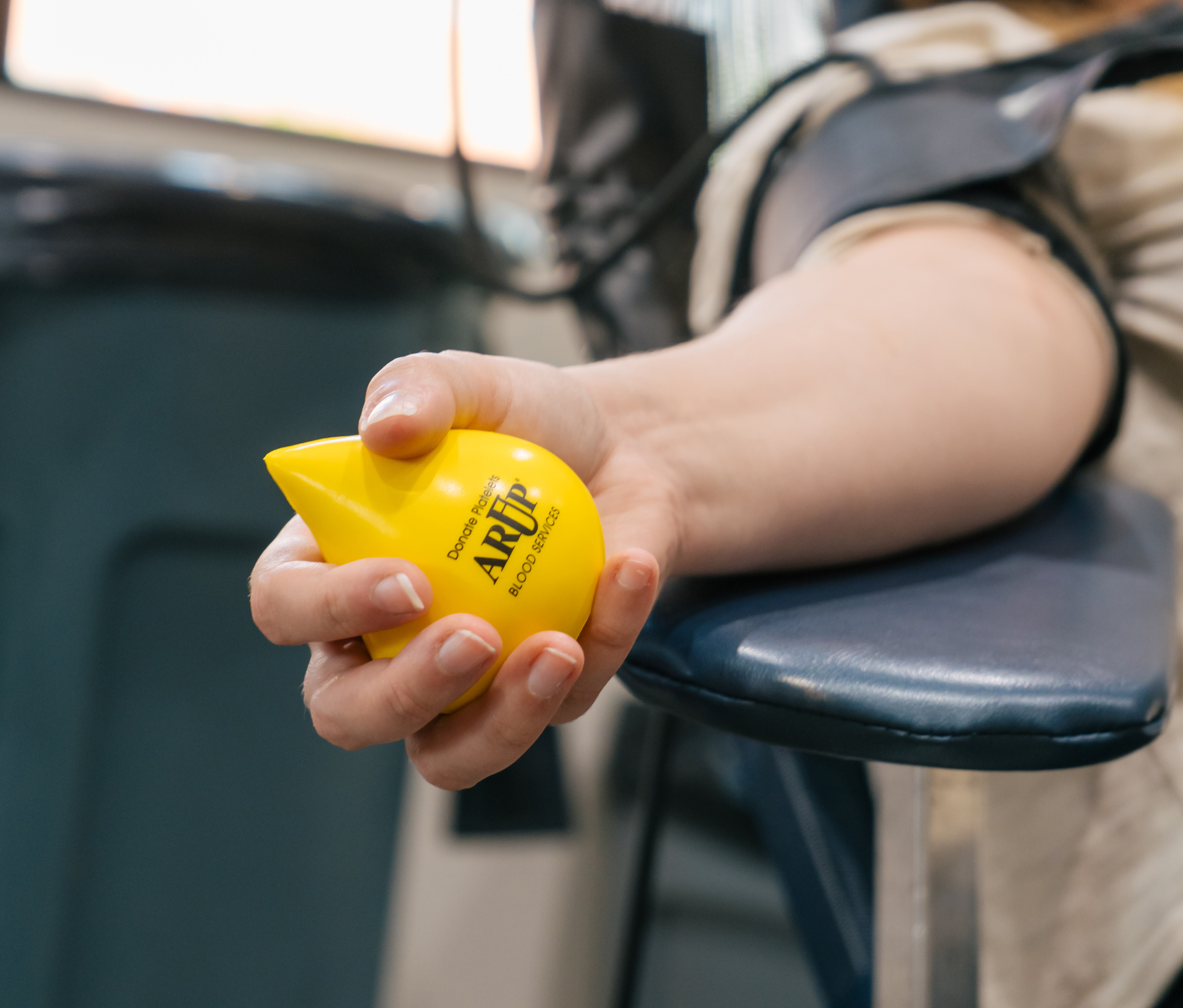
Platelets help control bleeding and are used to treat patients with cancer, blood disorders, and other serious conditions. Because platelets have a short shelf life, they are always in high demand.
Register
- Arrive at your scheduled appointment time.
- Bring a valid photo ID.
- Complete a registration form with your medical history.
- Save time by filling out the Xpress Pass before your visit and bring your QR code.
Refer to the Donor Qualifications page for more information.
Complete the Health Screening
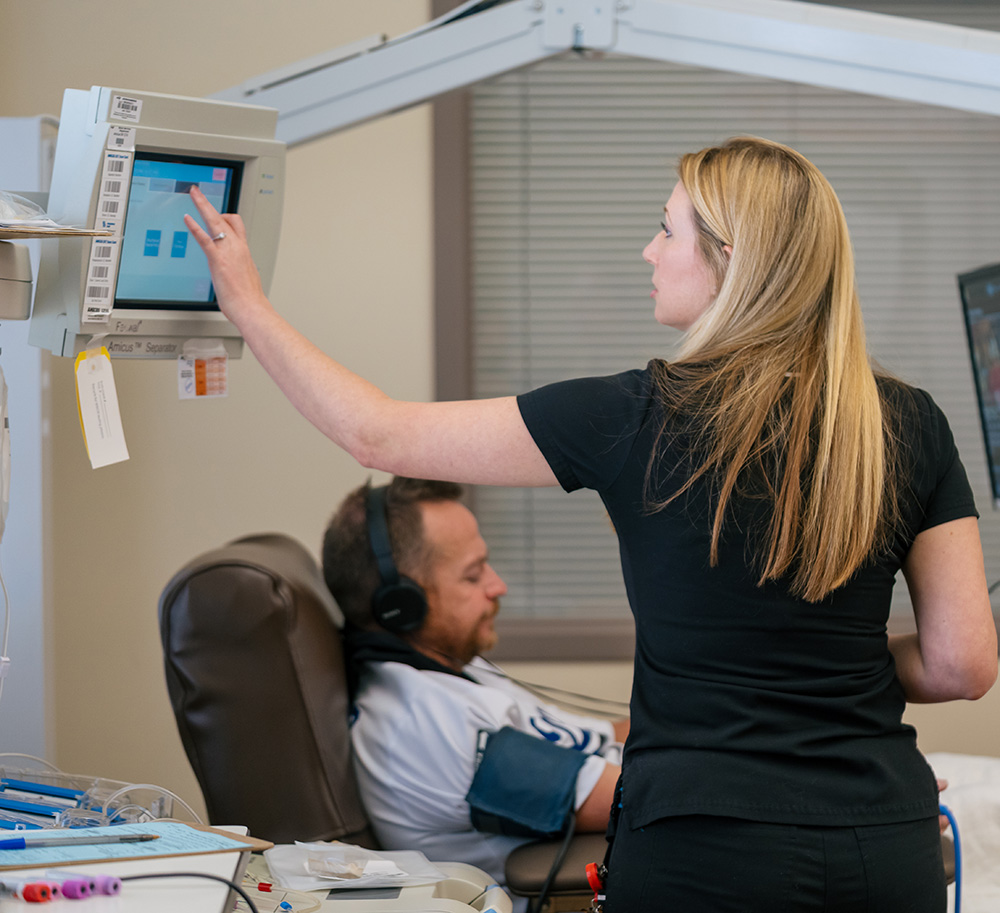
- We will check your blood pressure, pulse, temperature, and hemoglobin (iron) level.
- You’ll answer a few questions about your health in a private setting.
Some donors may be deferred based on FDA guidelines.
Donate
- A medical professional will clean your arm and insert a sterile needle.
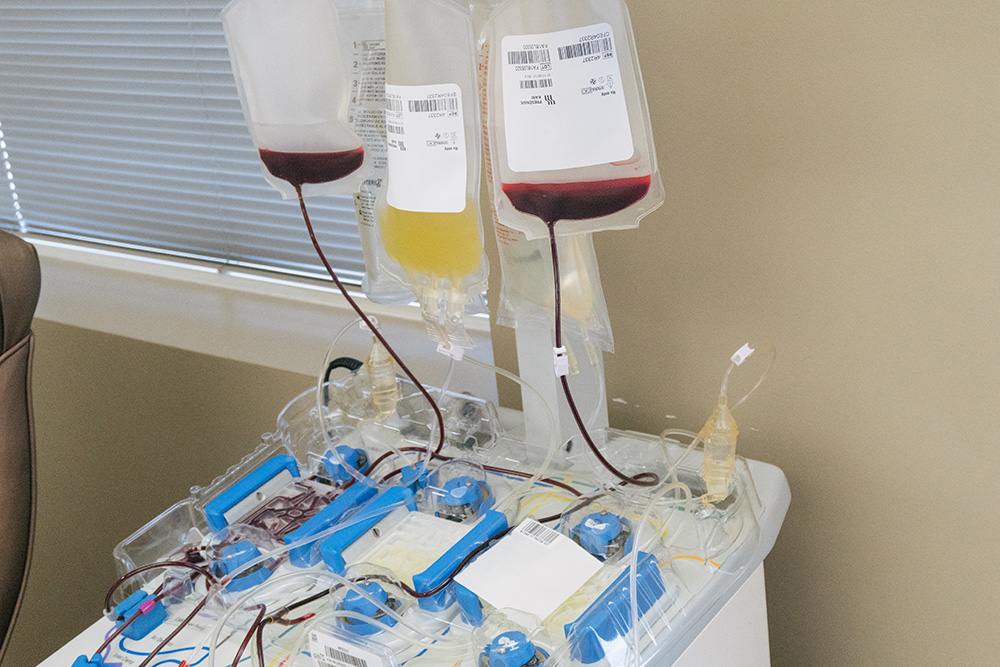
- Your blood will be processed through a machine that separates and collects platelets.
- The remaining blood components will be returned to your body.
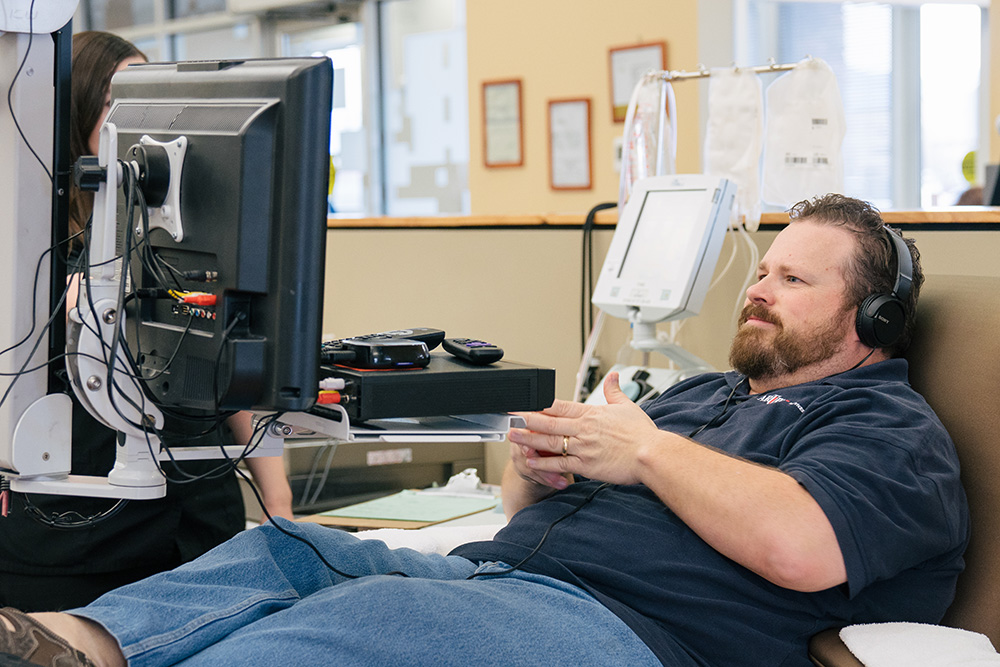
- You can relax while you donate and watch streaming services, listen to music, or enjoy the views of the Wasatch Front.
Rest and Recover
- Spend at least 10 minutes eating and hydrating.
- Most donors feel fine and can return to normal activities afterward.
Schedule Your Next Appointment
- You may donate every 10 days (up to 23 times per year).
- We encourage waiting at least 14 days between donations.
What happens during a platelet donation?
When you donate platelets, your blood will be processed through a machine that separates the platelets and returns the remaining blood components to your body. This type of donation takes about 80–120 minutes, and your body will replenish its platelets within 72 hours.
